Follow the format, then the field

A viewing notebook for golf fans

Follow golf through the shape of the contest

A golf tournament is easier to enjoy once you know what kind of contest you are watching. A four-round championship builds slowly and punishes one loose swing on the final afternoon. A match-play duel can turn on a single conceded putt. A team cup rewards partnerships and a captain's choices as much as individual brilliance.

These notes are for fans who already like the sport and want a steadier viewing habit: people who catch the closing holes of big events and now want to know which tournaments suit them, why the scoreboard reads the way it does, and what to watch for before the trophy is lifted. Tournaments are sorted by format and stakes rather than ranked, so the choice of what to follow rests on how you like to watch.
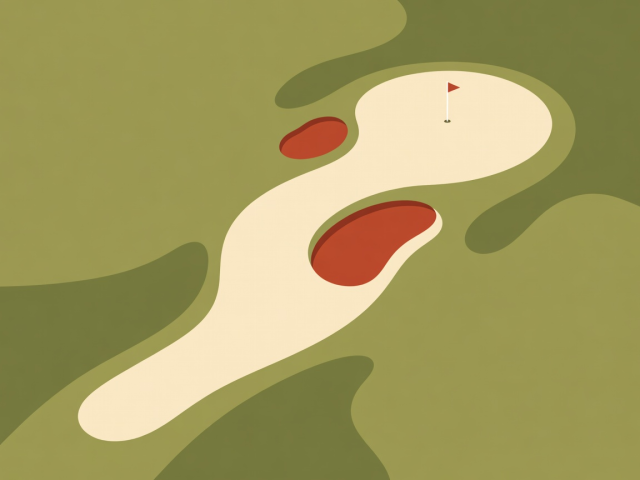
Flat illustration of a par-four hole in cream, terracotta and olive, with a winding fairway, two bunkers and a flag on the green

Four ways a tournament earns attention

Stroke play · four rounds

Championship stakes

Major championships carry a weight that ordinary tour weeks rarely match: deep fields, demanding course set-ups and a permanent place in the record books. The pressure usually shows most clearly over the final nine holes, when players who have been steady for three days suddenly have to protect a lead or chase one.

Why majors feel different

Totals or holes

Scoring formats

Stroke play rewards consistency on every hole; match play rewards beating one opponent on more holes. Knowing which is in use changes what a double bogey means.

Compare the formats

Pairs and singles

Team golf

Cups contested between sides add pairings, alternate-shot sessions and a running points total. A halved match late on can matter as much as a dramatic win, and the mood often swings between sessions.

How team cups unfold

Hole by hole

Watching rounds

A leaderboard is a snapshot, not the whole story. Tee times, the holes still to play and the wind all decide whether a two-shot lead is comfortable or fragile.

Read a round as it develops

Build a viewing plan around the format

Most fans pick tournaments by habit: whatever is on, whoever is leading. A viewing plan works better when it starts from the contest itself. Run through these steps before an event begins and the coverage will make more sense from the first tee shot.

  1. Name the contest you enjoy. Slow-building tension over four days, direct duels between two players, or loud team sessions with a points board? Your answer points to stroke-play championships, match-play events or team cups.
  2. Check the scoring format before play starts. Stroke play, match play, points-based Stableford variants and team sessions each reward different decisions. A bold shot that looks reckless in stroke play can be sensible in match play.
  3. Learn three or four key holes. Find the reachable par fives, any short par four that tempts players to drive the green, and the closing stretch. Those holes usually decide whether scores move.
  4. Note the stakes beyond the trophy. Majors bring history. Other events can affect season-long standings or places in team sides, and amateur championships can open doors to professional starts. Stakes explain why a player takes or avoids a risk.
  5. Follow the draw, not only the leaders. Early and late starters can face different weather. A player who posts a good score in calm conditions may look less impressive once the wind arrives for the afternoon field, or vice versa.
  6. Choose your viewing windows. The opening round shows the shape of the field, the end of the second round settles the cut, the third round sorts the contenders and the final nine usually decides the result.
  7. Keep a short notebook. Jot down the leader's score relative to par, the holes they have left and one thing that could change the round, such as a forecast shift in the wind or a difficult closing hole.

Common viewing slips

  • Reading a leaderboard without checking how many holes each player has completed.
  • Treating a match-play scoreline such as "2 up" as a stroke total.
  • Assuming the first-round leader is the favourite; early leads often fade as conditions and pressure change.
  • Watching only the final group and missing a charge from players finishing earlier.

When the scoreboard needs context

Which tournaments suit a newer fan?

The major championships are a natural start because the fields are strong and the history gives every leaderboard weight. If you prefer head-to-head drama, a team cup lets you follow a single session from start to finish.

What does "thru" mean?

It shows how many holes a player has completed in the current round. Two players on the same score are not level in practice if one still has six holes to play.

Why does match play scoring look so different?

Match play counts holes won, not strokes taken. "3 up" means one side has won three more holes than the other, and a match ends once the lead is greater than the holes remaining.

What is the cut?

In many four-round events, the field is reduced after two rounds. Players near the cut line are fighting to stay in the event, which makes the end of the second round a contest of its own.

More viewing questions